Home
Sub-themes
- Sustainable and social entrepreneurship
- Entrepreneurial finance
- Corporate entrepreneurship
- Globalization and emerging technology
- Technology and innovation
- Environment and policy
- Survival of small businesses
- People and Management of small businesses
- Entrepreneurship and small business challenges

About HTTTC Conference
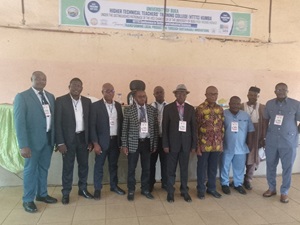
HTTTC Conference on Innovation in Tertiary and Industrial Sciences is an event that is conceived to take place every year. The theme of this year is ‘ENTREPRENEURSHIP AND SMALL BUSINESSES AS BEDROCK FOR INNOVATION AND DEVELOPMENT’. As experts in the domain, you are requested to send your research papers as your application to the above e-mails. The paper will be presented during the conference which will be an excellent opportunity to connect with other experts in your field and make a meaningful contribution to the advancement of science. Corrected manuscripts will be published after the conference in the special edition of the Journal of Tertiary and Industrial Sciences, JTIS.
Objectives of the Conference
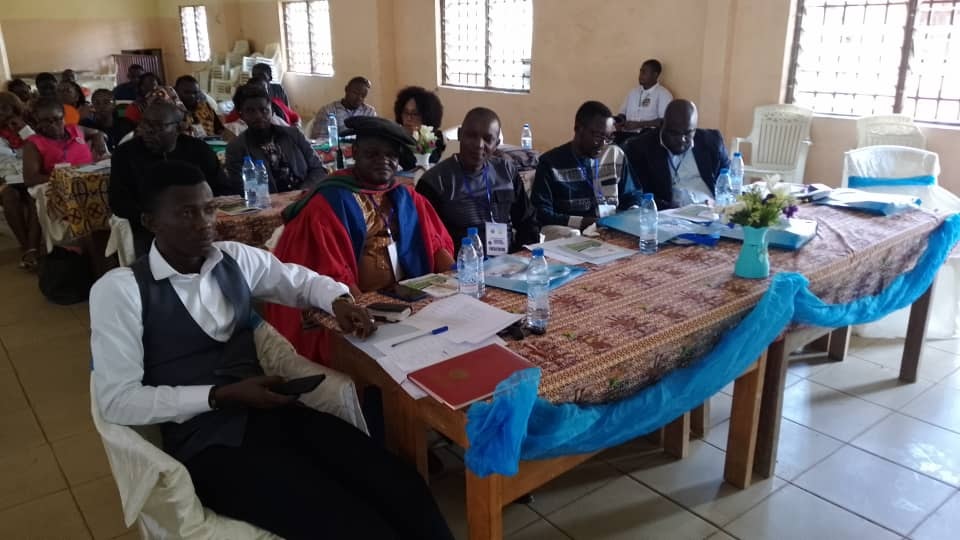
The main objective of this conference is to bring together science, technology and engineering experts in the fields of Entrepreneurship and Small Businesses, to show case advances in the domain. These advances will help stimulate interest in students and other stakeholders, who may take up research and/or entrepreneurial engagements in these areas for local economic growth and development. This will eventually curb unemployment and reduce human capital flight.
Get Involved!
Whether you’re a decision-maker, a doer, a disruptor, or a dreamer—this Forum is for you.
- Register Now to secure your place
- Become a Speaker or Sponsor
Hurry Up!
Don’t miss out this great opportunity! Register now and be part of this Global Development Conference on Entrepreneurship and Small Businesses
Communication Format
Face-to-face: the participant is to present his/her work in person
Communication Languages
French and/or English
Participation Fees in CFA F
| Deadlines | Students (XAF) | Non-Students (XAF) | Foreigners (in $) | |
| Early registration | April, 15th, 2026 | 5 000 | 10 000 | $90 |
| Late registration | April, 30th, 2026 | 10 000 | 15 000 | $135 |
| On-site Registration | May, 6th – 7th , 2026 | 15 000 | 20 000 | $180 |
Format of the Article
Preparation of Papers for JTIS
First Author1, Second Author2
1Department of Management Sciences, HTTTC Kumba, University of Buea, Buea, Cameroon
Email: abcdef@gmail.com
2Department of Information Technology, ABC University, USA
Email: abcdef@hotmail.com
| Abstract Abstract font should be Book Antiqua, Size 10, and justify. It should contain no more than 150 words and should report concisely on the purpose and results of the work described. It should be a single, self-contained paragraph which summarises the manuscript. Ideally, it should provide a brief context for the study, the objectives of the study, the methodology used and some key results in a qualitative manner. It should end with a sentence describing the recommendations and the implications of the study. The abstract must not include citations, figures or tables. Keywords— Maximum five key words in alphabetical order, separated by comma with capital letters for the first letters of each keyword. |
1. Introduction (Book Antiqua, 12 should be used although with line spacing 1.0. The work should be justify except for Title (Centralised) and authors right aligned)
The introduction brings out a general overview of the paper, identifies and explains the nature of the problem, the research questions, objectives/purpose of the study and the contribution of the paper. The introduction should be succinct, with no subheadings. Limited figures may be included only if they are truly introductory, and contain no new results.
2. Literature Review (Only for Tertiary Sciences)
This section explores previous works and state the research gap as well as the theories mobilised.
3. Methodology
This section contains sufficient details so that all procedures can be repeated. It may be divided into headed sub-sections such as the background to the study area, research approach, the population of study, sampling technique and sampling size, method (s) and instruments of data collection and analysis. Include the model if any here.
4. Results and Discussion
The results and discussion should be presented in one combined section, and may optionally be divided into headed subsections. It is good to indicate here that the presentation should be in line with your objectives.
5. Conclusions, Implications of the study, Contributions to science, Recommendations and suggestions for further studies
The Conclusions section should clearly explain the main findings, managerial and scientific implications of the work, highlighting its importance and relevance. It is also important here to raise the major contributions of the work as well as limitations, recommendations and suggestions for further studies.
6. Acknowledgements
Collate acknowledgements in a separate section at the end of the article before the references. List here those individuals who provided help during the research (for example, providing language help, writing assistance or proof reading the article amongst others).
7. References
After the References title, the list of references should only include works that are cited in the text and have been published or accepted for publication. Personal communications and unpublished works should only be mentioned in the text. Do not use footnotes or endnotes as a substitute for a reference list. Reference list entries should be alphabetized by the last names of the first author of each work.
For all references cited, the author(s) name(s), journal name / book title, section title / article title, year of publication, volume number / book chapters and paging should be made available. Abbreviated journal names and book titles should not be used. If there is the DOI number of publications, it should be given.
Reference Links
APA indexing style will be used in order to create links to publications in the list of references. So it is necessary to be sure they are fully accurate. Please note that wrong name(s), the wrong journal and book title, wrong article title, wrong year of publication and incorrect page number can block links to the indexing service. Unpublished results and information obtained through articles and personal communications are not recommended for use as the reference. Printed stage in the resources, if any, should be given a DOI number.
Online Document (Web) Reference
If authors use online document reference, the full URL and last date accessed must be given in reference list of the paper. If any further information is known at the relevant web resources, DOI, author names, dates, the main source publication, etc., the reference should also be given.
References in the Text
(In-text citations) Cite references in the text by name and year in parentheses. Some examples;
– For single authored reference: … (Akume, 2023) or Akume (2023) …
– For double authored reference: (Akume and Negou, 2024)
– Reference with multiple authors: (Akume et al., 2024)
– For multiple references, in order of year: (Akume, 2000; Tobie, 2001; Agbortoko and GilianTaylor, 2005; Negou et al., 2023)
– For references with the same author and year: (Fonkem, 2000a; Fonkem, 2000b)
Reference list
The list of references should only include works that are cited in the text and those that have been published or accepted for publication. Personal communications and unpublished works should only be mentioned in the text. Do not use footnotes or endnotes as a substitute for a reference list. Reference list entries should be alphabetized by the last names of the first author of each work. Cited articles, journals and books full names should be written in complete form. Journal abbreviations and names should not be used.
Journal Article
Asakawa, S., Yoshida, K., Yabe, K., 2004. Perceptions of urban stream corridors within the greenway system of Sapporo, Japan. Landscape and Urban Planning 68(2-3): 167 -182, doi: 10.1016/S0169-2046(03)00158-0.
Heede, B.H., 1991. Response of a stream in disequilibrium to timber harvest. Environmental Management 15 (2): 251-255.
Ben-Akiva, M., de Palma, A., Kanaroglou, P., 1986. Dynamic model of peak period traffic congestion with elastic arrival rates. Transportation Science 20(2): 164-181.
Yildirim, N., Taskin, H., Karaman, R., 2012. Istanbul-Beylerbeyi Sarayinda Coleopteratulerinekarsfloritkullanlarakyapilanfumigasyonuygulamas. Journal of the Higher Technical Teacher Traning College of the University of Bamenda 62(1): 47-52.
Book
Birkeland, P. W., 1984. Soils and Geomorphology. Oxford University Pres, New York.
Haris, C. W. and N. T. Dines, 1988. Time-saver Standards for Landscape Architecture. McGraw-Hill, Inc., New York.
Brilon, W. (Ed.), 1988. Intersections Without Traffic Signals, Proceedings of an International Workshop. Springer-Verlag, Berlin.
Book Chapter
Fischer, G.W., Nagin, D., 1981. Random versus coefficient quanta choicemodels. In: Manski, C.F., McFadden, D. (Eds.), Structural Analysis of Discrete Data with Econometric Applications, MIT Press, Cambridge, MA, pp. 273-304.
Symposium, Conference and Workshop Papers
Dahlgren, R. A., 1988. Effects of forest harvest on stream-water quality and nitrogen cycling in the Casper creek watershed. In: Proceedings of the Conference on Coastal Watersheds: The Casper Creek Story. May 6, Ukiah, California.
Daganzo, C., 1996. Two paradoxes of traffic flow on networks with physical queues. II Symposium Ingenieria de losTransportes, Madrid, 22-24 May 1996, pp. 55-62.
Online Document (Web) Reference
FAO. 2006. Rural radio transmissions and rural youth in Mali.
http://www.fao.org/sd/dim_kn1/kn1_060202_en.htm (Accessed: 27 February 2006).
Supervisory Committee
- Akume Daniel Akume (Professor), University of Buea, Cameroon
- Nkongho Anyi Joseph (AP), University of Buea, Cameroon
- Defang Henry (Professor), University of Buea, Cameroon
- Lissouck Daniel (AP), University of Buea, Cameroon
Organising Committee
- Akume Daniel Akume (Professor), University of Buea, Cameroon
- Agbortoko Ayuk Nkem (AP), University of Buea, Cameroon
- Dekoum Assaha Vincent Marius (L), University of Buea, Cameroon
- Njoh Roland (L), University of Buea, Cameroon
- Asoba Gillian (L), University of Buea, Cameroon
- Negou Ernest (L), University of Buea, Cameroon
- Kamda Aristide (L), University of Buea, Cameroon
- Bakoma Daniel Nanje (L), University of Buea, Cameroon
- Smith Ekonje (L), University of Buea, Cameroon
Scientific Committee
- Ngomo Horace Manga (Professor), University of Buea
- Akume Daniel Akume (Professor), University of Buea, Cameroon
- Defang Henry (Professor), University of Buea, Cameroon
- Ambe Njoh Jonathan (Professor), University of South Florida, USA
- KOM Charles Hubert (Professor), University of Ebolowa
- AKONO Ntonga Yves (Professor), University of Yaounde I
- NZIE WOLFGAN (Professor), University of Ngaoundere
- Messomo Elle Serge (Professor), University of Buea
- Kamdem cyrille Bergaly (AP), University of Yaounde II
- Lissouck Daniel (AP), University of Buea, Cameroon
- Nkongho Anyi Joseph (AP), University of Buea, Cameroon
- Foading Emmanuel (AP), University of Buea, Cameroon
- Ngouateu Wouagfack Paiguy (AP), University of Buea, Cameroon
- Tchakoutio Alain (AP), University of Buea, Cameroon
- Cordelia Givecheh Kometa (AP), University of Buea, Cameroon
- Ajongakoh Raymond Bella (AP), University of Buea, Cameroon
- Pascal Tabi Tabot (AP), University of Buea, Cameroon
- Leno Doris (AP), University of Buea, Cameroon
- Ntabe Eric (AP), University of Buea, Cameroon
- Bahel Benjamin (AP), University of Buea, Cameroon
- Kinfack Juetsa Aubin (AP), University of Buea, Cameroon
- Agbortoko Ayuk Nkem (AP), University of Buea, Cameroon
- Kemaja Didimus (AP), University of Bamenda
- NGAYIHI ABBE Claude (AP), University of Douala
- SIKAME Nikodem (AP), University of Dschang
- Negou Ernest (L), University of Buea, Cameroon
- Asoba Gillian (L), University of Buea, Cameroon
- Roland Ndah Njoh (L), University of Buea, Cameroon
- Dekoum Assaha Vincent Marius (L), University of Buea, Cameroon
- Nkenganyi Fonkem Marcellus (L), University of Buea, Cameroon
- Molombe Jeff Mbella (L), University of Buea, Cameroon
- Orock Fidelis Tanyi (L), University of Buea, Cameroon
- Kamda Silapeux Aristide (L), University of Buea, Cameroon
- Bakoma Daniel Nanje (L), University of Buea, Cameroon
- Massa Ernest Massa, University of Buea, Cameroon
- Ajamah Ferdinand, University of Buea, Cameroon
- Hannah Kolle, University of Buea, Cameroon
- Aloyem Kaze Claude Vidal, University of Buea, Cameroon
- BODOL MOMHA Merlin (L), University of Bertoua
- Karga Tapsia (L), Univeristy of Maroua
- Messi Nguélé Thomas (L), University of Ebolowa
- Huisken Menjo (L), University of Douala